When a guest arrives with a gift voucher, it is tempting to see a free meal going out of the kitchen. A Scottish restaurant group that moved its vouchers to Sidedoor in August 2026 found the opposite. Every table that paid with a voucher spent more than the voucher was worth, £1.60 for every £1, and in its first three months on Sidedoor the group’s voucher revenue grew 65% year on year.
About the group
The group runs several restaurants and has sold gift vouchers since July 2023, almost all of them through its main site. Over that time it has sold 2,651 vouchers worth £125,057 to 2,171 buyers.
When it moved to Sidedoor on 18 August 2026, it brought that whole history across from its previous voucher provider. Old and new sales now sit in one place, which is what made the rest of this story possible to tell.
A year shaped by December
The history shows a clear pattern. December alone accounts for 958 vouchers, 36% of everything the group has ever sold, worth £45,375. November is next, with 248.
Guests are also giving more generously. The average voucher has grown every year, from £39.83 in 2023 to £53.90 in 2026, with £50 and £25 the favourite amounts. And vouchers win repeat custom: 352 buyers, 16%, have come back to buy another, some as many as six times.
| Average voucher value | |
|---|---|
| 2023 | £39.8 |
| 2024 | £45.4 |
| 2025 | £53 |
| 2026 | £53.9 |
Source: The group's voucher sales, July 2023 to November 2026, including vouchers from its previous provider
What they set up
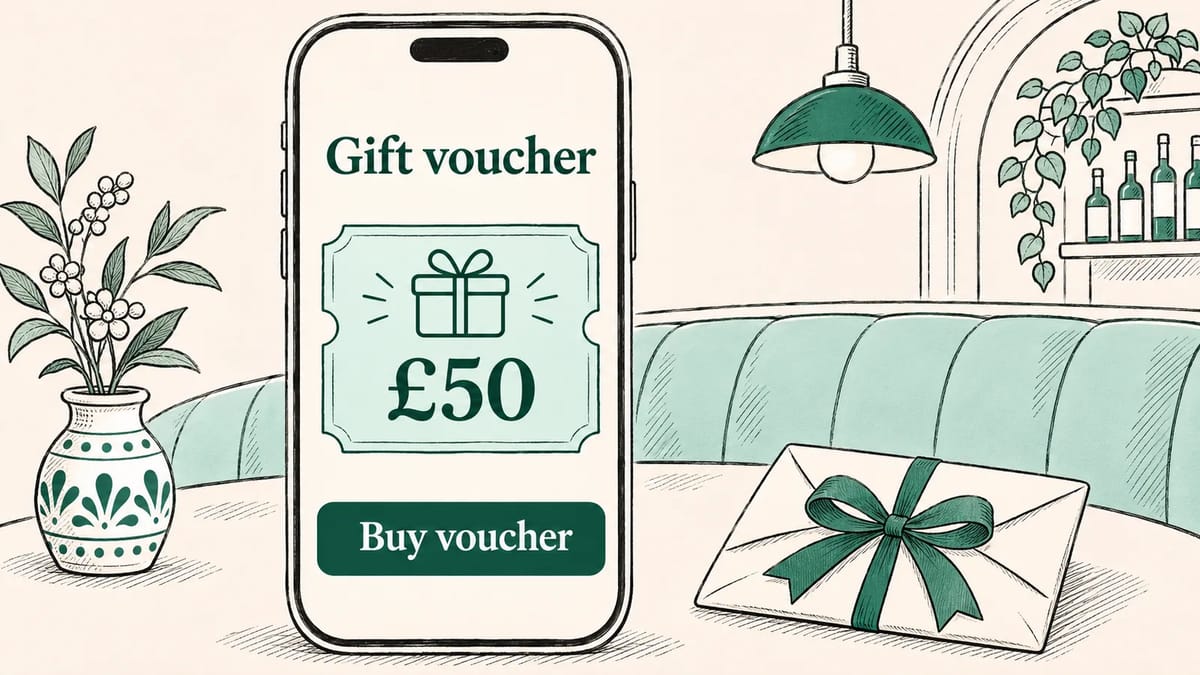
The group sells gift vouchers and gift cards through Sidedoor. Guests buy them online, the money goes straight to the group’s own account, and a voucher can be redeemed at any of its restaurants, with part use and expiry tracked automatically. Each voucher type has its own amounts, design, terms and expiry, which for this group is about six months.
Two other pieces turned vouchers from a gift product into something the group can measure and grow.
The till, linked to the booking
The group’s till is connected through Sidedoor’s till integration, so each bill lands on the reservation it belongs to. The till also records the voucher amount on the bill. For the first time, the group can see exactly what a voucher guest spends once they sit down.
A reminder before the voucher runs out
On 26 October 2026 the group switched on Sidedoor’s voucher expiry reminder. Twenty-eight days before a voucher expires, its holder gets a note with the balance, the expiry date and an invitation to book.
The results
Voucher revenue up 65%
In its first three months on Sidedoor, from 18 August to 17 November 2026, the group sold 162 vouchers worth £8,732. The same weeks a year earlier brought in 100 vouchers worth £5,300.
| Period | Vouchers sold | Voucher revenue |
|---|---|---|
| 18 Aug to 17 Nov 2025, before the switch | 100 | £5,300 |
| 18 Aug to 17 Nov 2026, on Sidedoor | 162 | £8,732 |
Every voucher table spent more than its voucher
With the till linked, the group could follow each voucher to the bill. Every one of the 21 bills that included a redeemed voucher came to more than the voucher.
- £1.60 for every £1 of voucher. £1,075 of vouchers brought in £1,720 of total spend.
- £1.46 per £1 before service charge.
- £22.65 extra per table, at the median.
- Over £110 on top for two larger parties, of four and five, each holding a £40 to £50 voucher.
A voucher, in other words, is not a discount. It is the reason a table gets booked, and the guests who come spend well beyond it.
Voucher tables outspend everyone else
Since 1 September 2026, tables paying with a voucher have also spent more than other tables at the same restaurants.
| Restaurant | Voucher tables | Other tables |
|---|---|---|
| Main restaurant, spend per head | £35.56 | £31.07 |
| Main restaurant, tables of two | £72.17 | £62.50 |
| Second restaurant, average bill | £65.45 | £48.31 |
At the main restaurant, that is 14% more per head.
The value in every unused voucher
If voucher guests spend this well, every voucher that goes unused is a visit and a bill that never happened. Of the group’s vouchers that have now either been used or reached their expiry, 66% were used and 34% were not: 837 vouchers worth £36,600.
Guests tend to leave it late. One in five redemptions happens in the voucher’s final 30 days, and the median time from purchase to use is 73 days. That is exactly the window the expiry reminder is built for. At £1.60 of spend for every £1 of voucher, bringing those guests back is worth far more than the face value of the voucher.
What’s next
The first reminders are going out now, ahead of the busiest month of the year, as many of this year’s vouchers come up to their expiry between late November and mid December. We will share how many guests they bring back in the new year.
What other restaurants can take from this
- Look past the voucher to the bill. If your till links to your bookings, you can see what a voucher guest really spends.
- Get ready for December. At this group, more than a third of all vouchers are sold in that one month.
- Count your expired vouchers. Each one is a table and a bill that didn’t happen.
- Remind guests before the deadline. Many redeem late, and a nudge a few weeks out gives them time to book.
Read more about gift cards and vouchers in Sidedoor, see how Sidedoor works for restaurants, or find out how another restaurant grew its online bookings.
Frequently asked questions
Do guests spend more than their gift voucher is worth?
At the restaurant group in this case study, they did. Every till bill that included a redeemed voucher came to more than the voucher, with £1.60 spent for every £1 of voucher.
Can Sidedoor remind guests before their voucher expires?
Yes. A voucher expiry reminder goes to the guest holding a voucher that is still active, a set number of days before it expires. Each voucher type can have its own lead time, or reminders switched off.
Can a gift voucher be used at any venue in a group?
Yes. Sidedoor vouchers can be redeemed across the venues in a group, with partial balances and expiry tracked for you.
Can I move my existing vouchers to Sidedoor?
Yes. The group in this case study brought its voucher history across when it switched, so sales from before the move sit alongside new ones.
Run bookings, guest lists and events on Sidedoor.
See how it works